Modern sportsbooks have revolutionized how bettors interact with their active wagers. Rather than being locked in once placed, many betting platforms now allow limited editing of live bet slips—a feature often called Edit My Bet, bet slip editing, or bet slip sale. These tools let you adjust selections, change stakes, add legs to accumulators, or remove risky picks before an event concludes. However, the rules governing when, how, and whether you can edit vary significantly by operator and by the jurisdiction they serve. For Indian bettors accessing offshore licensed sportsbooks, understanding these mechanics is crucial—not only to use editing tools effectively but also to navigate a complex legal environment and maximize the value of every rupee wagered.
This guide is designed as a comprehensive, India-specific manual for editing active bets on online betting sites. It covers the technical mechanics of bet editing, the legal and regulatory landscape affecting Indian users, practical step-by-step workflows, and advanced strategies for managing risk. Whether you’re adjusting a multi-match cricket accumulator after team news or removing a risky leg from a parlay mid-game, this article equips you with the knowledge to make informed decisions—and to understand the tax, compliance, and responsible gambling implications of every edit you make.
Understanding Bet Editing On Indian Betting Sites
Bet editing is the process of modifying an active, unsettled wager after it has been placed. Unlike simply cancelling a bet or placing a new one, editing keeps your original bet slip in a temporary “edit mode,” allowing you to add selections, remove legs, replace picks, or adjust stakes—then save those changes as a new bet. The key distinction is that editing is not reversible once confirmed; it creates a fresh bet incorporating your edits, usually at recalculated odds and a new potential payout.
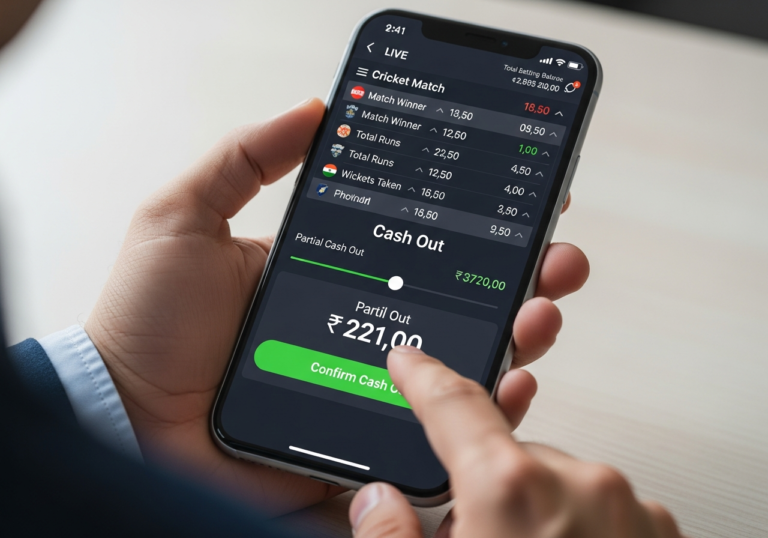
Many modern sportsbooks now offer editing features because they enhance user engagement and provide a safety valve for bettors who want to adjust exposure without sacrificing their original stake entirely. However, editing is not the same as cashing out. Cash out closes your original bet immediately, locking in a return based on current odds and event progress. Editing, by contrast, keeps the action alive while modifying it—and is often only available on bets where cash out itself is available. Understanding this distinction is the first step toward using these tools wisely.
| Feature | What It Does | Typical Availability | Risk/Reward Impact |
|---|---|---|---|
| Edit My Bet | Modify selections, stakes, or bet type on an open slip | Most pre-match and some live bets with cash out enabled | Allows fine-tuning without closing; may incur commission on replacements |
| Bet Slip Editing | Add or remove legs from accumulators; replace individual selections | Accumulators and multiples; some single bets | Increases potential payout if adding, reduces risk if removing |
| Cash Out | Instantly close the bet at current odds, locking in a return | Nearly all open bets until settlement | Removes further exposure; value depends on event progress |
| Bet Slip Sale (Partial) | Sell a portion of an open bet to other users or back to the operator | Supported bets only; typically requires minimum odds or stake | Locks in partial profit; reduces original bet size and max payout |
| Change Stake | Adjust the original bet amount during editing | Limited; many sites freeze stake once placed | Risky; may not be permitted on bonus or promo bets |
| Replace Selection | Swap one pick for another in the same market | Pre-match and some live; usually in same sport/market | Commonly triggers a small commission similar to partial bet sale |
What Counts As ‘Editing’ A Bet Versus Cashing Out
The core difference between editing and cashing out often confuses newer bettors. When you edit a bet, you are modifying the active slip while keeping it in play; the platform then recalculates odds and payout based on your changes. When you cash out, the bet is terminated—the wager is closed, and you receive a return based on the current odds and event outcome at that moment. Editing preserves the idea of “let’s see where this goes,” while cashing out means “I’m taking my money off the table now.”
Many sportsbooks only permit editing on bets where cash out is already active. This is because editing is, mechanically, a partial cash out followed by a new bet: the platform uses your current cash out value as the basis for the edited bet. If cash out is not available—for instance, if a market has already been settled, or if you used bonus funds that carry certain restrictions—editing is typically blocked as well.
Once you confirm edits, the original slip is voided and replaced with a new bet. This means your odds, stake, and potential payout are all recalculated. Some operators apply a small commission to replacements or deletions (similar to selling a partial bet slip), while others charge nothing for additions. It’s essential to review the new payout shown in the edit confirmation screen before saving, as odds may have shifted between the time you opened edit mode and the time you confirm.
India-Specific Context: Legal Grey Area & Platform Types
Most Indian bettors place bets on offshore licensed sportsbooks based in jurisdictions like Malta, Gibraltar, Curaçao, or the Philippines. This is because India’s national gambling law—the Public Gambling Act of 1867—technically prohibits organizing, managing, or in-person wagering in most states. However, the law does not explicitly ban individual users from placing bets on foreign-licensed platforms, creating a legal grey area that has persisted for decades.
Recent regulatory developments have begun to narrow that grey area. The Promotion and Regulation of Online Gaming Act 2025 (PROG Act) and the accompanying Regulation of Online Gambling Rules 2026 now define which games (skill-based, defined games of chance) are permissible, ban unlicensed “money games,” and establish a central authority to oversee licensed operators. These rules primarily affect India-based sportsbooks and payment processors, not the mechanics of editing bets on offshore platforms. However, they do impact which payment methods are accessible to Indian users and which operators can legally advertise in India. For the vast majority of Indian players, editing bets on offshore sites remains legally workable as long as they comply with tax obligations (a 30% tax on net winnings) and choose platforms with proper international licensing.
When Can You Edit An Active Bet?
Not every bet can be edited at every moment. Sportsbooks enforce eligibility conditions to manage risk and ensure fair play. Understanding when editing is possible—and when it is blocked—helps you plan your betting strategy and avoid frustration.
- Bet must be unsettled and open. Once an event outcome is determined or markets are closed, editing is no longer possible. Live markets in particular may lock rapidly once key moments occur (e.g., a goal is scored, a wicket falls).
- Cash out must be available. Most platforms only permit editing on bets that can be cashed out. If cash out is unavailable, editing is typically blocked as well. This restriction protects both player and operator from undue exposure.
- Bonus or promotional bets may be excluded. Bets placed using bonus funds, free bets, or promotional offers often cannot be edited, as editing could be used to circumvent bonus terms. Check your operator’s bonus policy before assuming edits are allowed.
- Partially sold or insured bets cannot be edited. If you have already sold part of your bet slip or purchased bet insurance, further editing may be restricted. Some platforms require you to complete or close those transactions first.
- Market-specific restrictions apply. Certain markets (e.g., player props in cricket, injury-dependent bets in football) may never be editable, or may become locked once key information is known. Pre-match football accumulators are often fully editable, while live in-play bets on the same matches may have limited editing windows.
- Single bets vs. accumulators have different rules. Single bets may only allow stake changes or cash out, while accumulators (parlays, multiples) typically allow selection additions, deletions, and replacements. Verify your slip type against the site’s rules.
- Time windows and event status matter. Some operators allow editing only until kick-off, while others permit live editing within specific halves or innings. Understanding these windows—which vary by sport—is essential for in-play strategy.
Common Restrictions On Editable Bets
Most sportsbook rulebooks contain explicit clauses stating that registered bets are non-revocable except through defined mechanisms: cash out, editing (if offered), and official bet cancellation (rare). These restrictions exist to prevent fraud and ensure stable order management. Common exclusions include:
- Bets placed using bonus funds or free bets.
- Bets that have been partially sold or have insurance applied.
- Bets in markets that have already been decided or locked due to event progression.
- Single bets on certain markets (e.g., futures, specials).
- Bets placed in some jurisdictions or under certain account restrictions.
Each Indian-facing sportsbook implements its own version of these rules. For example, one operator may allow editing on cricket match-winner bets right up until the toss, while another may lock editing once the toss is called. Some permit editing on all accumulator legs, while others restrict edits to certain combinations. Before relying on editing as part of your strategy, check your operator’s Betting Rules, Bet Slip Editing, or Cash Out policy pages to confirm what is and is not permitted on your specific account and bet type.
Core Bet Editing Actions Explained
Bet editing breaks down into discrete, repeatable actions. Understanding each one helps you execute edits confidently and anticipate how odds and payouts will change.
| Edit Action | Description | Typical Use Case | Key Limitations |
|---|---|---|---|
| Add Selection | Insert a new leg into an accumulator; odds multiply by the new selection’s odds | Building a parlay mid-game as fresh matches start, or adding a live pick when a favored team’s odds shift | Some operators do not charge commission; existing legs’ odds remain unchanged, but overall payout is recalculated |
| Delete Selection | Remove a leg from an accumulator, reducing risk and potential payout | Removing a risky leg after injury news or poor in-game performance | May trigger a small commission (like partial bet sale); remaining legs’ odds unchanged but overall payout recalculated |
| Replace Selection | Swap one pick for another in the same market (e.g., Home Win to Draw) | Adjusting after team news, changing a live prediction mid-game, or shifting a player prop pick | Usually incurs a commission; must stay within the same market; new odds calculated based on replacement selection |
| Change Stake | Increase or decrease the original bet amount | Raising stake on a promising parlay, or lowering it to free up risk capital | Many operators prohibit stake changes; bonus bets almost never allow stake increases |
| Change Bet Type | Convert a single bet to an accumulator, or vice versa | Turning multiple singles into a parlay to increase payout, or breaking a risky multi into safer singles | Not all operators support this; rules vary widely; may trigger new commission or minimum odds recalculation |
| Settle Early (Partial Cash Out) | Close part of the edited slip without closing the whole bet | De-risking a large accumulator by locking in partial profit while keeping some legs alive | Available only on certain slip types; proceeds reduce original stake; affects tax treatment |
Adding Selections To An Existing Bet
Adding selections to an existing bet—typically to an accumulator or multi-bet—is one of the most common editing actions. When you add a new leg, the new selection’s odds are multiplied by the current odds of the original slip, increasing the potential payout. The odds of the existing legs do not change; only the combined multiplier grows.
Many operators do not charge a commission on additions, making this an attractive way to build bigger payouts as new matches or events become available. For Indian bettors, adding live selections during an IPL day (when multiple matches might run) or adding a second-leg football parlay after the first match concludes are common use cases. However, additions also increase overall risk: the bet only wins if all original legs and the new leg hit. If you are chasing losses or building bets reactively based on emotion—particularly after a losing bet—adding selections can quickly spiral into larger, less disciplined action. Set a pre-planned limit on how many legs you will add before walking away.
Replacing Or Deleting Selections Safely
Replacing a selection means swapping one pick for another within the same market. For example, if your 1X2 (Home/Draw/Away) bet slip had Home Win selected, you could replace it with Draw if the team’s odds shift favorably or if new information emerges. Replacements typically stay within the same market to avoid creating a completely new bet structure; you cannot usually replace a player prop with a goal-scorer pick in the same edit action.
Deletions remove a leg from an accumulator entirely. If your three-match IPL parlay had a risky team as the third leg, you could delete that leg, reducing risk and potential payout. The upside is immediate risk reduction; the downside is reduced payout and potential commissions. Some operators apply a small commission to replacements and deletions—typically 2–5% of the bet amount—similar to selling a partial bet slip. Always review the new payout and odds shown in the edit confirmation before saving, as commissions can reduce expected value.
Step-By-Step: How To Edit Your Bet Slip On Indian Betting Apps
Editing a bet follows a consistent process across most Indian-facing sportsbooks. While interface details vary, the underlying workflow is similar on desktop and mobile apps.
- Log into your account and navigate to your bet history, active bets, or “My Bets” section. This is usually accessible from the main menu or account dashboard.
- Identify an editable bet by looking for a visual label such as “Edit Bet,” “Edit Pick,” or a pencil/edit icon. Only bets with cash out available will typically show this label.
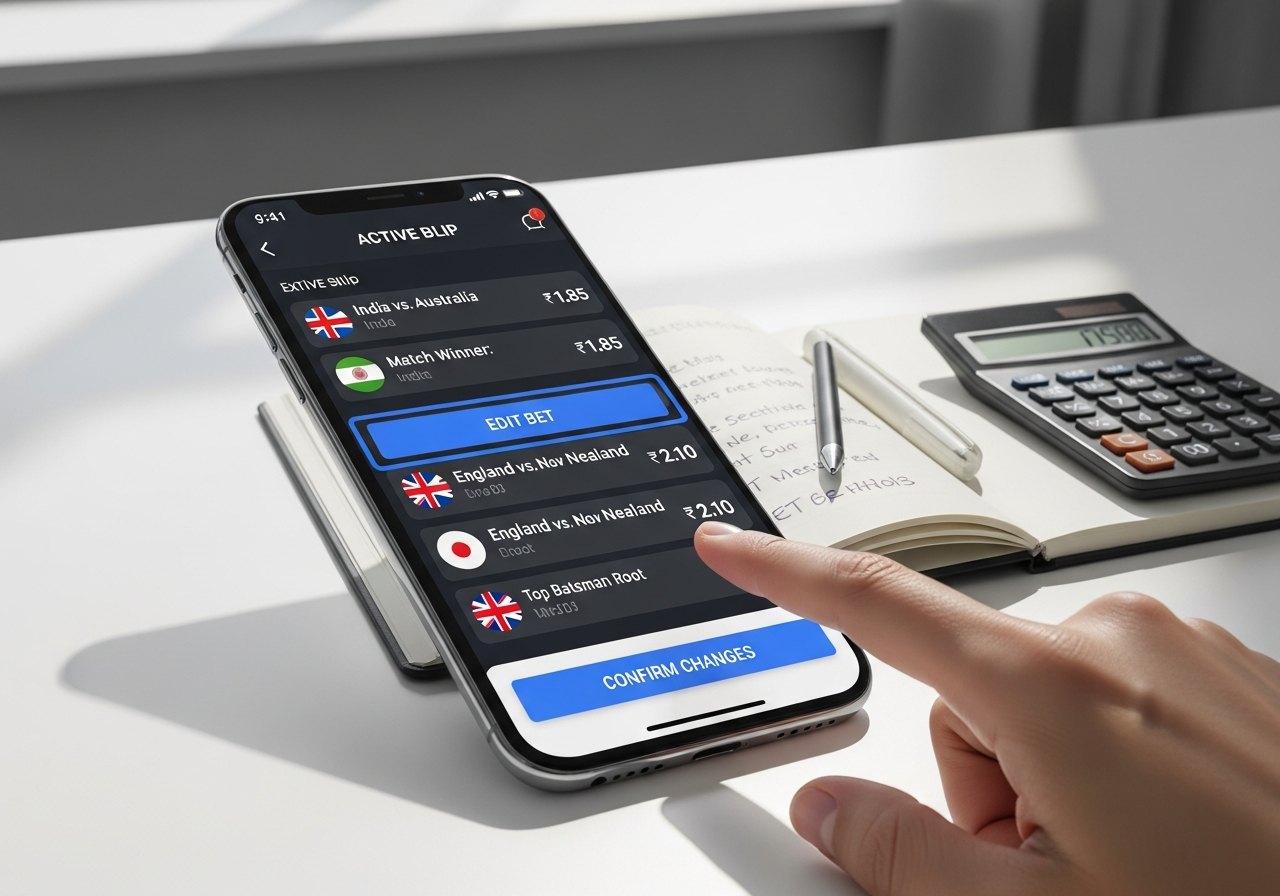
- Tap or click “Edit” to enter edit mode. The bet slip will open in a temporary edit state; your original bet remains active until you confirm changes.
- Select your edit action: add a new selection, delete an existing leg, replace a pick, or adjust the stake (if permitted). Each action will show a real-time update to the potential payout.
- Review the new odds, potential payout, and any commissions displayed in the edit summary. If odds have shifted significantly since you opened edit mode, you may see a refresh button—use it to ensure prices are current, especially on live bets.
- Confirm and save your edits. Once confirmed, the original bet is voided and replaced with a new bet slip reflecting your changes. You will receive a new bet ID or confirmation number.
- Note your new bet details for your records. The edited bet will appear in your history with the new slip composition and payout amount.
On mobile apps, the process is similar but may use press-and-hold gestures, swipe actions, or dedicated “Edit Pick” buttons instead of traditional clicks. Some apps also allow you to edit multiple bets in succession without returning to the main menu, speeding up the workflow.
Editing Through ‘My Bets’ And Bet Cards
Most sportsbooks organize active and settled bets into a “My Bets” or “Bet History” section, displaying each bet as a card or list item. These cards show the original stake, odds, current potential payout (if unsettled), and available actions. Visual tags or icons indicate which bets can be cashed out, edited, or closed.
Entering edit mode temporarily suspends the current slip’s status. While you are in the edit interface, the bet remains active in the system, but you are not exposed to further market movement on the original slip—only on any new selections you add. Once you confirm and save your edits, a new bet is placed immediately, and the original slip is retired. This transition is instant; there is no window where your bet is unexecuted or pending. Understanding this flow prevents confusion about when your bet is “live” and when it is being modified.
Editing Pre-Match vs Live (In-Play) Bets
Pre-match (ante-post) bets and live (in-play) bets offer very different editing experiences. Pre-match bets typically have more stable odds, longer editing windows, and fewer surprises. Live bets move quickly, with odds updating in real-time based on event progress, creating a higher-pressure environment for editing.
| Bet Type | Editing Options | Time Window | Odds Volatility | Typical Commissions/Limitations |
|---|---|---|---|---|
| Pre-match | Full range: add/delete/replace/change stake | Available until market goes live (event start) | Low; odds stable or shift gradually | No or low commission on additions; 2–5% on replacements/deletions |
| Live (first half/period) | Limited; often add selections only | Usually open for entire first half/first innings | High; odds shift rapidly with every ball/play | Higher commissions possible; some operators restrict stake changes |
| Live (second half/late game) | Very limited; may only cash out | Narrow window; may close minutes before final result | Very high; odds extremely volatile | Minimal editing; cash out is primary option |
| Live player props | Restricted; may not allow any edits | Bet-specific; often locked once player is substituted | Very high; extremely time-sensitive | Often no editing; prop markets lock quickly |
Real-Time Odds Changes While You Edit
When you edit a live bet, the odds shown in the edit interface are a snapshot from the moment you entered edit mode. However, sportsbooks update odds in real-time using automated data feeds from sports statistics providers. If you spend several seconds in the edit screen—especially during a fast-moving event like a cricket over or a football corner—the odds may shift before you confirm.
This real-time shift can work in your favor (odds on a new selection improve) or against it (your payout estimate becomes outdated). To avoid nasty surprises, refresh the odds before confirming on live bets. Most apps include a “Refresh Odds” or “Update Prices” button in the edit summary. Use it every time you edit a live bet, especially if more than a few seconds have elapsed since you opened edit mode. This is particularly important in cricket markets around crucial moments—wickets, sixes, boundaries, or bowling changes—where odds can swing dramatically in seconds.
Sport-Specific Considerations For Indian Bettors
Cricket bets (IPL, international matches) and football bets (domestic leagues, international) behave differently under the editing rules. Cricket markets often lock very quickly once play starts: match-winner markets may be restricted to editing only until the toss, while player performance props (runs, wickets) may never be editable due to the volatility of individual player outcomes. Ball-by-ball markets and over/under bets can sometimes be edited in-play, but windows are often tight.
Football bets typically allow more generous in-play editing windows. A pre-match multi on a day’s matches can often be edited during the first half, allowing you to add or remove legs as results come in. However, markets specific to a player (cards, goals by player) may lock once that player has already been involved in a notable event. Tennis and other racquet sports often have strict editing restrictions due to the rapid nature of play and the volatility of momentum shifts.
Understanding your chosen sport’s market-locking behavior is crucial. If you plan to use editing as part of your in-play strategy—for instance, adding matches to a multi as the day unfolds—confirm that your operator permits this for the specific markets you want to trade in. Regulatory changes and operator policy updates can also shift these rules, so verify before your session.
How Editing Affects Cash Out Value, Odds And Payout
Editing a bet triggers a recalculation of both odds and potential payout. Understanding how these recalculations work helps you evaluate whether editing actually adds value or whether you should simply cash out instead.
- Editing is mechanically a partial cash out. When you edit, the platform converts your original bet’s current cash out value into the basis for a new bet. If your original £10 accumulator had a cash out value of £35, that £35 is the starting point for your edited bet. If you then delete a risky leg, the new bet is recalculated from that £35 base, not from your original £10 stake.
- Commissions reduce effective value. If you replace or delete a selection, the operator may apply a 2–5% commission. This commission is deducted from the cash out value, reducing the starting point for your new bet. Additions typically incur no commission, making them the lowest-friction edit action.
- Odds are recalculated based on current market prices. If you replace a selection, the new selection’s current odds are used, not its pre-match odds. Similarly, if you add a leg, the new selection’s live odds apply. This means edits can be exploited for value (backing off at worse odds) or leveraged for edge (adding selections at favorable odds).
- Potential payout reflects the new bet structure immediately. The edit summary shows your new potential payout based on the recalculated odds, existing legs, and any new selections. This is not a projection; it is the exact amount you will win if all remaining legs hit.
- Tax treatment does not change based on edits. India imposes a 30% tax on net betting winnings. An edited bet is treated as a new bet; tax is calculated on your net profit across all bets on your account, not on individual edited slips.
Minimizing Value Loss When You Edit
Before confirming any edit, compare the new payout to what you would receive by simply cashing out the original bet. Calculate the difference: if editing reduces your return by more than 10–15% compared to cashing out, it may not be worth the friction. Additionally, check whether commissions are being applied transparently; some platforms bury commission details in fine print.
In some cases, editing adds strategic value despite commissions. For example, if you have a three-leg multi where one leg has already won and is now “live,” removing that leg and locking in its contribution while editing the remaining legs could reduce overall risk while maintaining upside on the remaining picks. Conversely, if you are simply reducing payout by deleting a leg due to fear—a common emotional pitfall—ask yourself whether you should have placed that leg in the first place. Consistent editing driven by emotion, rather than strategy, erodes long-term value.
Legal And Regulatory Considerations For Indian Players
The legal status of online betting in India is evolving. Understanding current law and emerging regulation is essential for informed decision-making, even though editing mechanics themselves are legally neutral.
India’s primary national gambling statute is the Public Gambling Act of 1867, which prohibits organizing or managing gambling but does not explicitly criminalize individual users wagering on foreign sites. This has created a de facto tolerance for offshore betting. However, several states—notably Gujarat and Telangana—have enacted stricter local statutes. The Promotion and Regulation of Online Gaming Act 2025 and the Regulation of Online Gambling Rules 2026 introduce a central licensing framework for “online games” and define which games (skill-dominant, specified games of chance) can be offered by licensed operators in India.
Importantly, these new rules primarily regulate India-based operators, payment processors, and advertising. They do not directly prohibit Indians from betting on offshore licensed sites; rather, they create a compliant pathway for local operators and restrict which international operators can legally advertise in India. For offshore sites with proper international licensing (Malta, Gibraltar, Curaçao), the mechanics of bet editing do not change; however, your choice of payment methods and the operator’s customer service responsiveness may be affected by banking compliance requirements.
India’s New Online Gaming And Gambling Rules
The PROG Act 2025 establishes a central online games regulator and defines which games are permissible. The 2026 Regulation of Online Gambling Rules specify compliance standards for licensed operators, including user verification (KYC), responsible gambling tools, record-keeping, and tax withholding. These rules prohibit unlicensed “money games” and empower the authority to issue directions to banks and payment providers to suspend transactions with non-compliant operators.
This regulatory development indirectly affects your ability to edit and cash out bets. If your chosen offshore operator falls under regulatory scrutiny or if Indian payment processors receive directions to block transactions, you may find that deposits and withdrawals become restricted—making editing and cashing out moot if you cannot access your account or move funds. This is not an argument against betting on offshore sites with proper licensing; rather, it underscores the importance of choosing operators with recognized international licenses and stable banking relationships in India.
Responsible Gambling And Tax On Edited Bets
Editing can be a tool for responsible risk management: removing a risky leg, cashing out partially to lock profit, or adjusting stakes to match your bankroll. However, editing can also enable the opposite behavior—chasing losses, adding risky selections to a losing multi in hopes of a big win, or cycling through edits frantically during live play. Set clear rules for when you will and will not edit. For instance: “I will edit only to remove selections based on new information (injuries, team news), never to chase losses.” Most reputable operators offer deposit limits, loss limits, and self-exclusion tools; use them.
India imposes a flat 30% tax on net online betting winnings. This tax applies whether you win on an original bet or an edited bet; the operative figure is your net profit across all bets in a calendar year. If you win ₹10,000 and lose ₹3,000, your taxable net is ₹7,000, and you owe 30% (₹2,100) regardless of how many times you edited individual slips. Edited bets are treated as fresh bets for tax purposes, but winnings from edited bets are aggregated into your net annual figure. Keep records of all bet confirmations, edits, and results for tax filing.
Site-Level Differences: How Top India-Facing Sportsbooks Handle Bet Editing
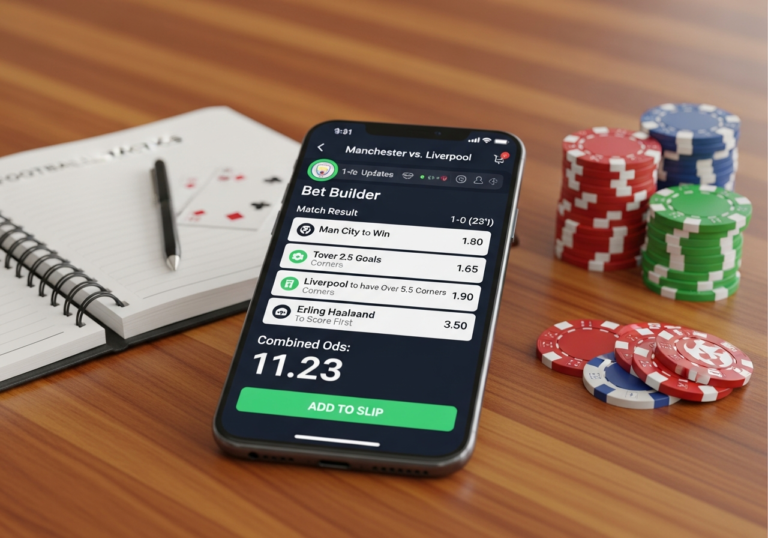
Different operators implement bet editing with varying names, features, and restrictions. While some generic offshore sportsbooks (BetMGM, PointsBet) use “Edit My Bet” or “Edit Pick,” platforms catering specifically to Indian cricket fans may use terms like “Bet Builder” or “Slip Editing.” Understanding these variations helps you evaluate which operators offer the editing flexibility you need.
| Operator Type | Editing Feature Name | Supported Bets | Key Limits For Indian Users |
|---|---|---|---|
| Large offshore multi-sport sportsbooks (Malta license) | Edit My Bet, Bet Builder | Most accumulators, multiples; some singles | Full KYC required; commissions on replacements; may restrict bonus bets from editing |
| Cricket-focused offshore books (Curaçao license) | Bet Slip Editing, Edit Bet | Cricket multis, match winner, player props | Limited editing on props; strict market-locking rules; variable commission policies |
| Emerging skill-based operators (PROG Act licensed, if/when available in India) | Bet Adjustment, Slip Modification (future) | Skill-based games; online gaming not yet regulated for gambling | May enforce stricter editing windows; expected to follow PROG Act guidelines |
| Smaller or less-regulated platforms | Basic cash out only; no formal editing | Bets; minimal controls | No editing; editing feature may not exist or may be unreliable |
Why You Must Read Each Site’s Bet Slip Rules
Each operator maintains a dedicated Betting Rules, Bet Slip Editing, or Cash Out policy document. These documents are not marketing material; they are legal terms governing your use of the platform and your rights regarding open bets. Many rules state explicitly that registered bets are non-revocable except through cash out, official cancellation, or editing (where offered). If an operator does not mention editing in its rules, assume editing is not available and do not rely on it.
Policies can change in response to Indian regulatory developments or operator operational changes. Some offshore operators have already begun updating their T&Cs to reflect the new PROG Act framework, even though it primarily governs local operators. Before using editing as part of your strategy, confirm that your chosen platform explicitly permits it in its current rules. Do not rely on older blog posts or marketing materials; always check the live Terms and Conditions section.
Advanced Strategies: Using Bet Editing To Manage Risk
Bet editing is fundamentally a risk-management tool when used strategically. It allows you to adapt to new information, changing odds, and evolving event dynamics without abandoning your entire bet. However, like any powerful tool, it can be misused.
- Trim risky legs proactively. If you placed a three-match IPL parlay and one team’s star batter is injured before their match, edit to remove that match rather than watch the odds shift against you. This is information-driven, disciplined editing.
- Lock profits via partial edits. If your four-leg accumulator is 2–0 up in-play and the remaining legs look shaky, edit to remove one or both remaining picks and cash out at a good price. This “locks in” the contribution of the winning legs while avoiding the risk of a late collapse.
- Adjust stakes strategically (if permitted). Some operators allow stake increases on winning parlays. If your slip is 3–1 with only one leg left and that leg is heavily favored, increasing your stake on that final leg could amplify return. However, only do this with a clear expected value calculation, never emotionally.
- Shift markets after new information. If odds on a replacement selection drop dramatically (e.g., a team’s odds shift from 2.0 to 1.5 after a goal), replacing a less confident pick with the now-favored pick could increase expected value. Similarly, if odds on one of your legs widen after an injury, adding an additional leg at the new price might boost your payout.
- Use editing alongside cash out and new bets. You do not have to edit to adjust your strategy. You can cash out part of your slip, then open a new independent bet with a different structure. Sometimes this hybrid approach is cleaner than chained edits.
Real-World Scenarios For Indian Bettors
Scenario 1: IPL Multi, One Team News
You backed a three-match IPL parlay: Team A to win, Team B to win, Team C to win. Before Team A’s match, the captain is ruled out due to injury. His batting average drops from 45 to 35 when he plays, and his replacement is less consistent. Your odds on Team A win shift from 1.80 to 1.95. Should you edit?
Calculate: Your original parlay odds were 1.80 × 1.85 (Team B) × 1.90 (Team C) = 6.33. Removing Team A, your remaining two-leg parlay is 1.85 × 1.90 = 3.515. If your original stake was ₹1,000, your current cash out is roughly ₹3,500–₹3,700 (depending on how much of the multi has settled if Team A has not yet played). Editing to remove Team A locks in that value and removes downside. This is defensive, information-driven editing.
Scenario 2: Football Parlay, One Leg Won, One Risky
You placed a four-match football parlay at the start of the day. By halftime, Team A has won (1–0) and Team B has drawn (0–0), leaving you 1–1 up on legs. Your remaining two legs are Team C (slightly favored) and Team D (less confident, but high odds). Your current cash out on the full parlay is ₹8,500. If you edit to remove Team D, your two-leg slip (A won, B drawn, C favored) could lock in ₹5,000 with Team C to come. This trade-off—locking ₹5,000 gain vs. risking the full ₹8,500 on an unsure Team D—depends on your confidence in Team C. If Team C is 1.70 odds (67% implied win rate), editing removes ₹3,500 of potential gain but also eliminates the risk of Team D’s collapse bringing down your winnings.
Scenario 3: Cricket Accumulator, Adding a Live Match
The IPL has three matches on a given evening. You placed a two-match multi early (Team A, Team B). By the second match, both are tracking well to win, and the third match is about to start. Team F (in the third match) has just opened at 1.85 odds, and you think that is value. You can edit your two-leg slip to add Team F, tripling your odds and potential payout. However, adding increases risk: the slip only wins if all three hit. Commissions are typically not applied to additions, so the math is clean. This is opportunistic, information-driven editing.
Combining Editing With Cash Out And New Bets
Sometimes the best strategy is not to edit at all, but to cash out and start fresh. Imagine your five-leg accumulator is 3–2 up, with the remaining legs looking increasingly uncertain. You could edit to remove both remaining legs, or you could cash out the entire slip and place two separate new bets with clearer logic. The latter approach—cashing out and rebuilding—can reduce complexity and decision fatigue.
Alternatively, you could combine editing with a hedge bet. Cash out 50% of your parlay (locking in a gain), then edit the remaining 50% to remove risky legs while keeping high-confidence picks. This creates a de facto split bet, where part of your exposure is locked and part remains live. The key is clarity: know whether you are using editing to reduce risk responsibly or whether you are using it to chase losses or maximize action. Set a rule before the session: “I will edit only to remove selections based on new information, or to lock in profit when a bet is clearly winning. I will not edit to chase losses or add risky legs.”
Operational And Account-Level Factors Affecting Bet Editing
Beyond the mechanics of editing itself, several account-level and operational factors determine whether you can edit at all.
Your KYC (Know Your Customer) status is the gating factor for advanced features. Most operators require full identity verification before you can access cash out, editing, and withdrawal functions. If your account is only partially verified, these tools may be unavailable. Payment method verification is equally important: if you have not verified the payment card or bank account you deposited with, some operators restrict cash out and editing until you do.
Additionally, an operator’s risk management systems may limit you. If you have a history of rapid bet cycling, large losses, or suspected bonus abuse, the operator may apply account restrictions: deposit limits, loss limits, or even suspension of advanced features like cash out and editing. These controls are typically invisible but can frustrate users when editing suddenly becomes unavailable. Choosing a reputable, well-capitalized operator with stable systems reduces the risk of arbitrary feature restrictions.
KYC, Payment Channels And Feature Availability
Full KYC verification typically requires submitting a government-issued ID, proof of address, and sometimes proof of income. The process is standard across all reputable operators and is mandated by international gaming licenses and Indian regulatory compliance. Once verified, you unlock full access to deposit, withdraw, and edit features.
Payment channel verification adds an extra layer. If you deposited via a debit card, the operator may ask you to verify that card (usually through a small micro-transaction) before allowing withdrawals. If your payment method is a third-party wallet or bank transfer, similar verification applies. Some operators restrict edits and cash outs until payment channels are verified, viewing unverified accounts as higher-risk.
In rare cases, users report that some less-reputable platforms have restricted cash out or withdrawals without clear cause—claiming account review, regulatory checks, or vague security concerns. This is a red flag. Choose operators with transparent, publicly available licensing information, established customer service, and documented regulatory compliance. Avoid platforms that make cash out or editing unreasonably difficult, as these are often signs of underlying operational or financial instability.
Operational And Account-Level Factors Affecting Bet Editing
Your account status and operational controls also influence your ability to edit bets. Full KYC verification and payment method verification are usually required before cash out and editing become available.
Operators also enforce risk-based account restrictions. If you have submitted a self-exclusion request, deposit limits, or loss limits, these may affect whether editing is enabled. Similarly, if your account falls under review due to bonus abuse, chargebacks, or unusual betting patterns, some features may be restricted. These controls are typically not transparent to the user, but they exist to protect both you and the operator from problematic behavior.
KYC, Payment Channels And Feature Availability
Full Know Your Customer verification requires submitting a government ID, proof of address, and sometimes proof of funds. This verification is non-negotiable for all reputable operators and is mandated by international gaming licenses and the PROG Act framework. Once complete, you gain access to deposits, withdrawals, cash out, and editing.
Payment method verification adds a secondary layer. Most operators require you to verify the card, bank account, or e-wallet you deposited with—usually via a micro-transaction or documented confirmation. Until verified, some platforms restrict withdrawals and may also block editing. This is a compliance measure to prevent fraud and account takeover.
Some users have reported issues with less-established operators restricting withdrawals or editing indefinitely while citing account reviews. These situations are usually signs of platform unreliability. Always prioritize operators with clear licensing (Malta, Gibraltar, Curaçao, or future PROG Act licenses), transparent T&Cs, and documented customer service responsiveness. When evaluating a platform, check user reviews not just on betting forums but on payment and withdrawal experiences specifically. If a platform makes editing or cash out opaque or difficult, reconsider whether it is trustworthy enough for your money.