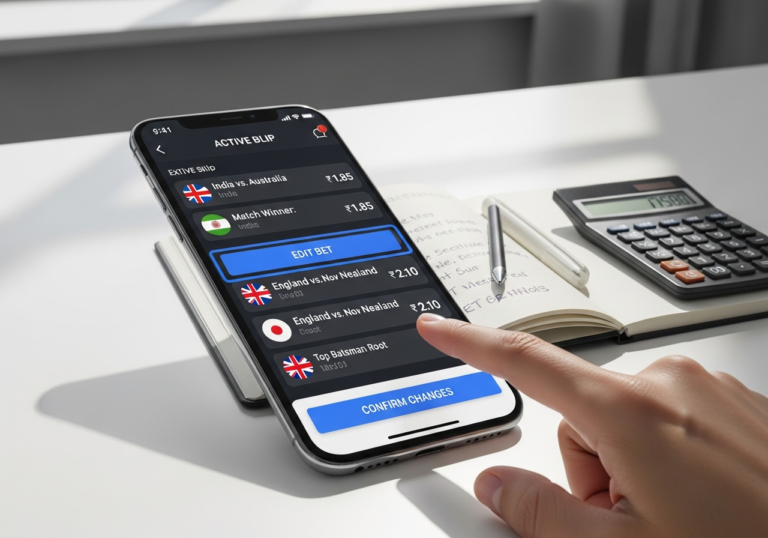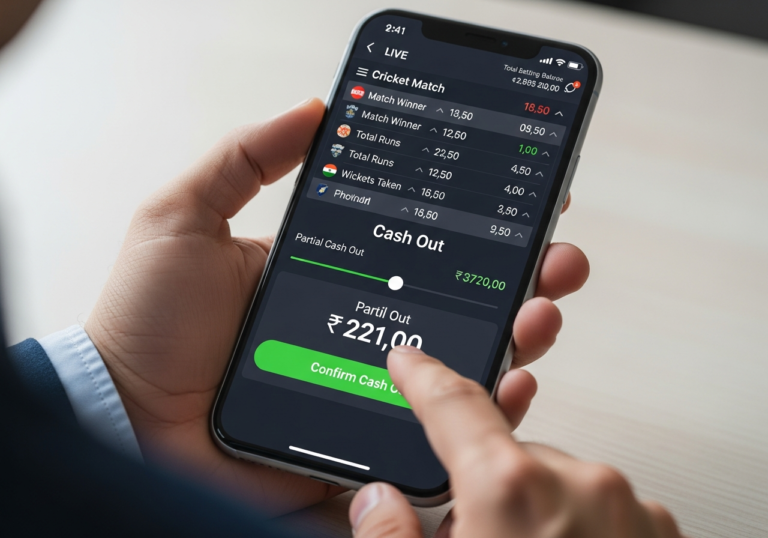
Bet builders have transformed how football bettors approach same-match wagering, and Indian football markets are no exception. Whether you’re watching the Indian Super League (ISL), the I-League, or domestic cup competitions, a bet builder lets you combine multiple selections from a single fixture into one custom wager—potentially at higher combined odds than you’d find in traditional accumulators.
This guide explains what bet builders are, how to construct them strategically for Indian football, which markets work best together, and how to avoid common pitfalls. Market availability varies by bookmaker and fixture, so we’ll also cover how to navigate those practical differences while keeping your approach coherent and value-focused.
What a Bet Builder Is in Indian Football Betting
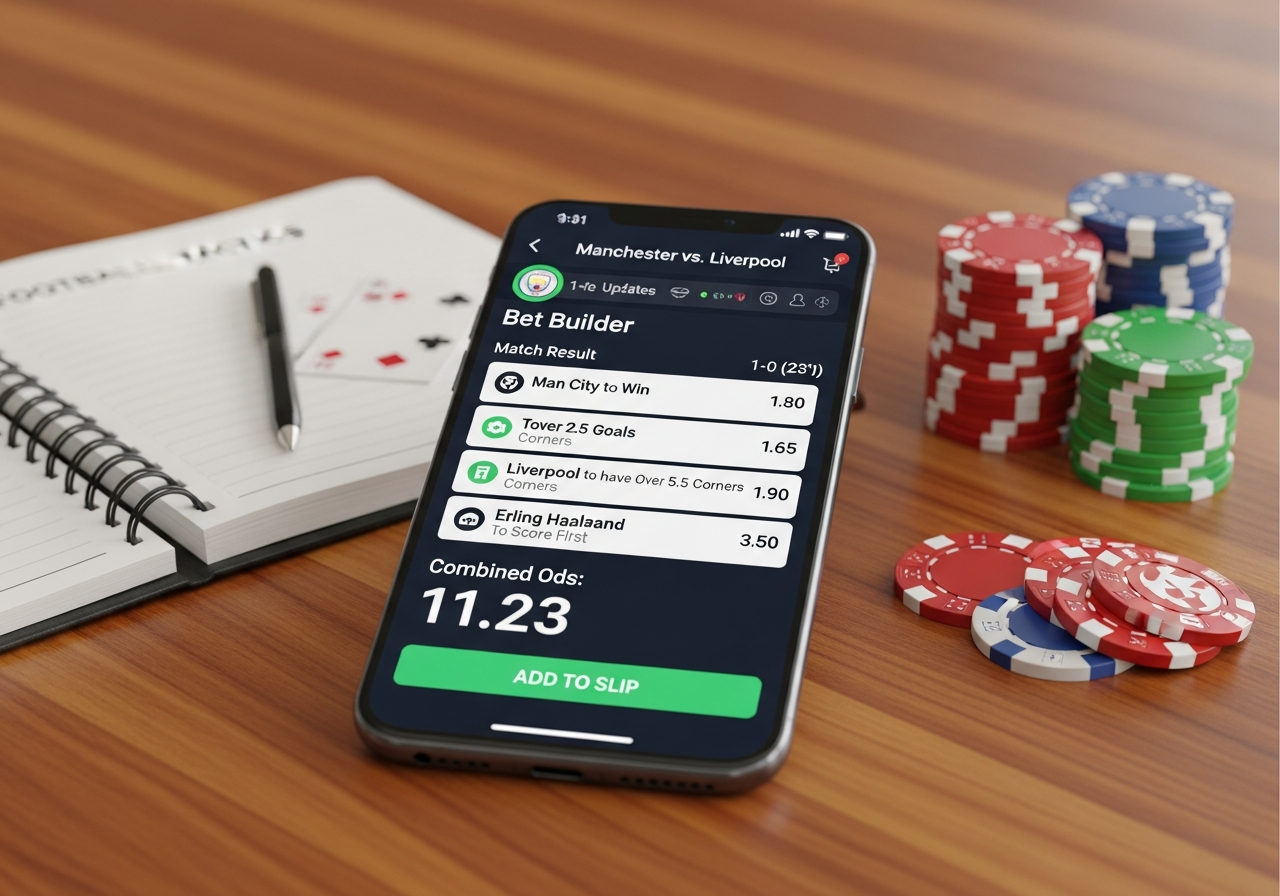
A bet builder is a custom wager that combines two or more selections from the same match into a single bet slip. Unlike a traditional accumulator that spans multiple fixtures, a bet builder keeps all legs confined to one game, which is why it’s also called a “same-game multi” or “same-match combo.” For Indian football, this means you can construct a custom bet around an ISL match, an I-League fixture, or a domestic cup game using markets that the bookmaker offers for that specific event.
The key difference between a bet builder and a standard accumulator is scope and correlation. An accumulator typically links different matches across multiple rounds, while a bet builder focuses all its logic on a single match outcome. This allows you to build narratives around how a particular game might unfold—for example, combining a team’s expected dominance with expected goal volume, disciplinary patterns, or corner frequency.
Bet builders are especially useful in Indian football contexts because domestic matches often have predictable patterns based on team quality, travel fatigue, pitch conditions, and squad rotation. A stronger team playing at home in good form might justify combining a win, over-goals, and higher corner counts. Conversely, a tight derby might pair a low-scoring result with both teams to score, reflecting defensive resilience and balanced attacking intent.
How Bet Builder Works on a Single Match
The process of building and placing a custom bet is straightforward:
- Select your fixture – Choose the Indian football match you want to bet on (an ISL or domestic cup game, for instance).
- Add your first selection – Pick a market and outcome, such as “Home Team to Win” or “Over 2.5 Goals.”
- Add subsequent selections – Build out your bet slip by adding more markets: goals, corners, cards, both teams to score (BTTS), player props, or handicaps.
- Review the combined odds – The sportsbook calculates the cumulative odds for all legs combined. All selections must win for your bet to pay out.
- Confirm your stake and place the bet – Enter your wager amount and submit. Invalid combinations (such as contradictory outcomes) are blocked by the bookmaker’s system.
Each leg depends on the others; if even one selection loses, your entire bet loses. The bookmaker will also prevent you from adding obviously correlated or mutually exclusive legs—for instance, you cannot combine “Home Team Wins 1–0” with “Over 3.5 Goals” because they conflict.
What Makes It Different From an Accumulator
| Feature | Bet Builder | Accumulator |
|---|---|---|
| Match scope | Single match only | Multiple matches (typically 2–10+) |
| Selection dependency | All legs from one game | Each leg from a different game |
| Correlation handling | Bookmaker restricts linked outcomes | No correlation limits |
| Odds inflation | Moderate; focused narrative | Higher; exponential multiplication |
| Popular for | Deep match analysis | Coverage across a full slate |
| Risk concentration | One match risk | Distributed across many matches |
The bet builder’s single-match focus means you can lean heavily on contextual knowledge—form, venue, lineup news, travel schedules—without worrying about the compounding failure risk that multi-match accumulators introduce. However, this also means your entire stake depends on one outcome, so correlation management and coherent match logic matter even more.
Best Indian Football Markets to Combine
Not all markets are created equal when building custom wagers. The strongest bet builder selections are those that are widely available, easy to understand, and logically linked to your overall match narrative. Here’s a breakdown of the most useful markets for Indian football bet builders:
| Market | Why it works | Typical use case |
|---|---|---|
| Match Odds (1X2) | Foundation selection; always available | Pairing a strong favorite with other confidence markers (goals, corners) |
| Over/Under Goals | Reflects expected tempo and attacking output | Home favorites often paired with Over 2.5 or Over 3.5 |
| Both Teams to Score (BTTS) | Indicates balanced attacking strength | Derbies or mid-table clashes with defensive vulnerabilities |
| Corners Over/Under | High-tempo or possession-heavy teams | Strong attacking teams often deliver 8+ corners; defensive sides below 6 |
| Cards Over/Under | Reflects referee intensity and foul tolerance | Tight derbies; matches with history of disciplinary tension |
| Asian Handicap | Reduces draw risk; suits dominant teams | Favorites given 0.5–1.5 goal advantage |
| Player Props (goals, assists, shots) | Niche but growing in ISL coverage | Star forwards or playmakers in dominant matchups |
Core Markets Most Bookmakers Usually Offer
- Match result (1X2) – Home win, draw, away win. The foundational market for any bet builder.
- Total goals – Over/under specific thresholds (2.5, 3.5, etc.), reflecting expected scoring volume.
- Both teams to score (BTTS) – Yes or no; useful for identifying open, high-scoring matches.
- Handicap/Asian lines – Gives the underdog virtual goals or subtracts from the favorite, balancing implied probability.
- Corners – Over/under totals, often ranging from 8.5 to 11.5 depending on team profiles.
- Cards/disciplinary – Yellow or red card counts; helpful for heated fixtures.
- Goal scorers and assists – When available, these player-specific props add granularity to match narratives.
How to Build Stronger Custom Bets
Creating a strong bet builder isn’t about chasing the highest possible odds; it’s about constructing a coherent match read and then selecting legs that align with that logic.
- Define your match narrative first – Before adding any selections, decide how you expect the game to flow: dominant team pressing a weaker opponent, a tight defensive battle, or an open, attacking contest.
- Select complementary legs – Choose markets that reinforce your narrative. If you expect a dominant favorite to press high, pairing a win with over goals and over corners makes sense.
- Avoid contradictory selections – Never pair outcomes that conflict (e.g., under 2.5 goals with both teams to score; these are impossible together).
- Limit the number of legs – A 3–4 leg builder is typically stronger than a 6–8 leg builder because each additional leg reduces your win probability and adds variance.
- Check for bookmaker restrictions – Some operators flag correlated selections or refuse certain combinations; review the error messages to understand what’s blocked.
- Compare odds across bookmakers – Different sportsbooks price bet builders differently. A few minutes comparing two or three operators can reveal value discrepancies.
- Stake appropriately – Don’t bet more on a 5-leg builder than you would on a single match bet; the increased complexity warrants more cautious sizing.
Start With a Match Script
Before you even open your bet slip, picture how the match might unfold. Is the home team in a 10-game winning streak facing a relegation-form visitor? You’d expect early pressure, multiple chances, and likely goals. That script supports a home win, over 2.5 goals, and over 9 corners.
Conversely, if it’s a defensive derby between rivals with recent injuries and fitness concerns, your script might be a tight, low-scoring affair with more fouls and fewer clear-cut chances. That script supports a low total goals, elevated cards, and possibly BTTS (because tired defenses can be breached).
The script doesn’t guarantee the outcome, but it clarifies your reasoning and ensures your selected legs belong together. Avoid the trap of building backwards from high odds; build forwards from match context.
Use Correlated Legs Carefully
Correlation refers to how likely one outcome is to influence another. Some pairs are naturally linked; others are not.
| Approach | Benefit | Risk |
|---|---|---|
| Home win + Over 2.5 goals | Naturally correlated; dominant team likely to score more | Odds not drastically inflated; good value potential |
| BTTS + High corners (10+) | Tight game with attacking opportunity; defensively open | Reasonable pairing if both teams’ attacking intent is balanced |
| Over 3.5 goals + Over 10 corners | Open, end-to-end match; both teams attacking | High correlation risk; if first leg fails, second likely fails too |
| Home win + Under 1.5 goals | Defensive, controlled victory | Extremely low odds; rarely justifiable from value perspective |
| Player goals + Match outcome unrelated | Outcome independent of team result | Weakest pairing; doesn’t reinforce narrative |
Bookmakers are aware of correlation and may limit overly linked combinations to prevent you from getting odds that don’t fairly reflect true probability. If a leg is rejected, it usually means the correlation is too strong for the sportsbook’s risk model.
Indian Football Angles That Matter Most
Indian football—whether ISL, I-League, or domestic cups—operates under distinct pressures and conditions that differ from European leagues. Successful bet builders account for these realities.
Travel fatigue plays a significant role in Indian domestic football. Teams traveling from Mumbai to Kerala or Delhi to Goa may arrive fatigued, affecting pressing intensity and stamina. A team in travel recovery mode might underperform its true capability, making them a weaker pick despite being a paper favorite.
Pitch quality and weather are inconsistent across Indian venues. Some stadiums have excellent surfaces; others are patchy or waterlogged during monsoon. Poor pitches slow play, reduce ball velocity, and increase unpredictability—factors that often lead to fewer goals and more chaotic defending. Heavy rain or heat can also depress scoring.
Squad depth in Indian football is often uneven. Star players carry disproportionate weight; their absence due to injury or suspension can dramatically shift expected output. Regular European teams have strong bench options; Indian clubs sometimes do not. Track lineup news carefully.
Uneven team strength is pronounced. A strong ISL side might dominate a weaker domestic cup opponent, leading to predictable high-scoring wins. Conversely, evenly matched rivals in a derby create defensive tension that suppresses goals. Context is crucial.
Data availability is thinner than in major European leagues. Historical databases for Indian football are less comprehensive, making pattern analysis harder. This means recent form and direct intelligence (injuries, motivation) matter more than statistical models.
Factors to Check Before You Place the Bet
- Recent form (last 5–10 matches) – Is the team in peak confidence or recovering from losses? ISL form often matters more than season-long averages.
- Injuries and suspensions – Missing a key striker, playmaker, or defender fundamentally changes expected output. Check team news sources and social media.
- Venue and home/away split – Does the home team have a strong record at their ground? Some Indian venues heavily favor the home side.
- Schedule congestion – Teams playing their third match in a week are fatigued; expect lower intensity and fewer goals.
- Head-to-head record – Derbies and familiar opponents often produce repeating patterns (defensive stability, predictable scoring).
- Weather and pitch reports – Check weather forecasts and ground conditions; poor surfaces depress scoring and change passing accuracy.
- Lineup and team news – Confirmed starting XIs, last-minute changes, and tactical shifts should be finalized before you submit your bet.
Market Availability and Bookmaker Differences
Not every bookmaker offers the same bet builder markets for every Indian football fixture. This variation is one of the most practical challenges you’ll face.
| Factor | Why it matters | Impact on Bet Builder |
|---|---|---|
| Market depth | Some sportsbooks offer 5 markets; others offer 20+ for the same match | Fewer markets = simpler builders; more markets = richer customization |
| Live builder availability | Not all operators offer live (in-play) bet builders; some only pre-match | Live builders let you adjust for half-time scores; pre-match only limits flexibility |
| Maximum legs per builder | Bookmakers cap the number of legs (e.g., max 5 or max 10) | Ambitious builders get rejected if they exceed the sportsbook’s limit |
| Player prop availability | Tier-1 ISL matches get extensive props; lower-profile domestic cup matches may not | Popular leagues have deeper player markets; smaller matches simplify to basic markets |
| Odds pricing variance | Different sportsbooks price the same builder differently based on their models | Shopping around reveals value; one bookmaker’s tight pricing another’s generous |
| Correlated leg restrictions | Some operators are stricter about linked outcomes; others are permissive | Conservative sportsbooks block more combinations; liberal ones allow more creative builders |
How to Spot Valid Combinations
- Try adding the first two legs – If no error appears, the basic pairing is allowed by the bookmaker.
- Add a third leg and check again – Most rejections surface immediately with a notification (e.g., “This combination exceeds our correlation limit”).
- Review the error message – Bookmakers usually specify whether the issue is correlation, maximum legs, or market unavailability for that fixture.
- Pivot or simplify – If a specific pairing is blocked, drop one of the correlated legs and replace it with a less-linked selection (e.g., swap “Over 3.5 goals + Over 10 corners” for “Over 2.5 goals + Both teams to score”).
When a Fixture Has Poor Builder Coverage
Some Indian football matches—especially lower-profile domestic cup ties or regional competitions—have minimal bet builder support. In these cases:
- Stick to foundational markets: Match odds, total goals, and BTTS are almost always available.
- Avoid niche props: Player goal scorers, specific card outcomes, or exotic handicaps may not be offered.
- Simplify to 2–3 legs: A straightforward 3-leg builder (home win + over 2.5 goals + over 8 corners) is more likely to be accepted than a 6-leg combination with player props.
- Check alternative sportsbooks: If one bookmaker has limited markets, another may offer deeper coverage for the same fixture.
Stake, Price, and Value Considerations
The odds on a bet builder can be seductive—a 4-leg parlay might offer 3.50 or even higher combined odds—but odds inflation doesn’t equal value. Here’s what to watch:
| Topic | What to watch | Why it affects value |
|---|---|---|
| Odds markup | Bookmakers inflate combined odds to cover correlation risk; check whether the builder odds reflect true probability | Markup of 5–15% is normal; anything above 20% suggests poor value |
| Number of legs | Each additional leg multiplies odds but also multiplies failure risk | A 3-leg builder at 2.00 is often better value than a 5-leg at 4.50 |
| Leg quality | Are all selections based on your match analysis or are some “filler” to chase odds? | Weak legs dilute your edge; every leg must earn its place |
| Comparative odds | Does the same builder cost more or less at a different sportsbook? | Line shopping takes 2 minutes and can unlock 5–10% better payouts |
| Liquidity and sharps | Heavily backed builders suggest professional bettors see value; lightly backed ones may indicate weak odds | Monitor bet movement; consensus backing signals value |
Simple Value Checks Before Confirming
- Compare the builder odds against two other sportsbooks – A difference of 0.10 or more in combined odds is worth switching.
- Verify leg independence – Ensure your selections feel genuinely uncorrelated; if you’re relying on the same outcome three different ways, collapse them into fewer legs.
- Assess your conviction level – Ask yourself: “If I could only place one bet on this match, would it be this builder?” If not, the odds are chasing you rather than the other way around.
- Check for line movement – If the odds have drifted significantly since you started building, investigate why (news, injury updates, lineup changes).
- Confirm stake sizing – Never bet more on a builder than on a single-match wager; complexity justifies caution.
Examples of Custom Bets for Indian Football
To illustrate bet builder logic in practice, here are template examples for different match types:
- Dominant favorite at home: Home team to win + Over 2.5 goals + Over 8 corners. Rationale: Stronger team, home advantage, and expected high possession and tempo support all three legs.
- Evenly matched derby: Draw + Both teams to score + Over 7 corners. Rationale: Balanced rivalry often produces defensive tension but clear-cut attacking moments; draws are common in high-stakes derbies.
- Visiting favorite in adversity: Away team to win + Under 2.5 goals + Under 8 corners. Rationale: Superior away team expected to win but may do so cautiously on unfamiliar ground, limiting attacking output.
- High-tempo offensive clash: Over 3.5 goals + Both teams to score + Over 9 corners. Rationale: Both teams attacking intent creates space, pace, and frequent tackles.
- Defensive dog upset: Home win + Under 2.5 goals + Cards over 4.5. Rationale: Weaker home side steals a tight win through organization and set pieces; rough play keeps card count elevated.
Safer Builder Templates
| Match type | Possible legs | Risk level |
|---|---|---|
| Dominant home favorite vs. weak visitor | Home win + Over 2.5 goals + Over 8 corners | Low-to-moderate |
| Balanced cup tie (similar quality) | Draw + BTTS + Asian handicap 0.0 | Moderate |
| Away team in form, home side struggling | Away win + Under 3.5 goals | Low |
Higher-Risk Builder Templates
Higher-risk builders typically add player-specific props, aggressive goal thresholds, or disciplinary markets. For example, combining “Over 4.5 goals + Over 10 corners + Top goalscorer from shortlist” multiplies variance significantly. These builders work only if your match analysis is genuinely compelling—you’ve identified a specific tactical pattern, injury-weakened defense, or form-driven edge that justifies the complexity. Use them sparingly and only when you have clear conviction on the match flow.
Common Mistakes to Avoid
Building custom bets is intuitive, but several pitfalls consistently erode value:
Contradictory legs: Pairing “Under 2.5 goals” with “Both teams to score” is mathematically impossible. Mistakes like these are caught by the sportsbook but waste your time and reveal sloppy thinking.
Too many legs: A 7-leg builder needs all seven legs to land. Even if each leg has a 70% win probability, combined probability drops to ~8%. Fewer, stronger legs beat more, weaker ones.
Ignoring lineup news: A team’s confirmed absence of a key striker or midfielder can invalidate your entire match script. Always finalize your bet after official teamsheets are released, not hours before.
Chasing long odds: A 5.00 builder sounds exciting, but if you’re stretching your logic to justify the fifth leg just to reach that number, you’ve lost your edge. Stick to legs that earn their place.
Neglecting travel and fatigue: In Indian football, a team’s travel schedule is a material edge. Ignoring it costs value.
Using bookmaker-restricted combinations repeatedly: If a sportsbook blocks a pairing, don’t assume another bookmaker will accept it. Some restrictions are industry-standard for correlation risk.
A Practical Pre-Bet Checklist
- Write down your match narrative in one sentence – What’s your core thesis? (e.g., “Dominant home team pressing tired visitors in poor conditions.”)
- List your three primary legs – Match result, goals, and one supporting market (corners, BTTS, cards).
- Check for contradictions – Do any two legs conflict mathematically? (Under goals + BTTS is impossible if “both teams to score” requires 2+ goals total.)
- Verify recent team news – Are there late injuries, suspensions, or lineup surprises? Refresh news sources 30 minutes before kickoff.
- Compare odds at two sportsbooks – Spend 2 minutes checking if a competitor offers better combined odds for the same builder.
- Confirm your stake size – Is it within your bankroll and smaller than a single-match bet? If not, scale it down.
- Submit and move on – Once confirmed, don’t second-guess. Your edge was in the analysis, not in hedging or adding late legs.
Building bet builders for Indian football rewards patience, coherent match analysis, and discipline. Use them to crystallize specific match reads into higher-odds payouts—not to chase random combinations. Start simple, test your logic against actual results, and refine your approach over time. The strongest bet builders are those that feel inevitable after you’ve done your homework.